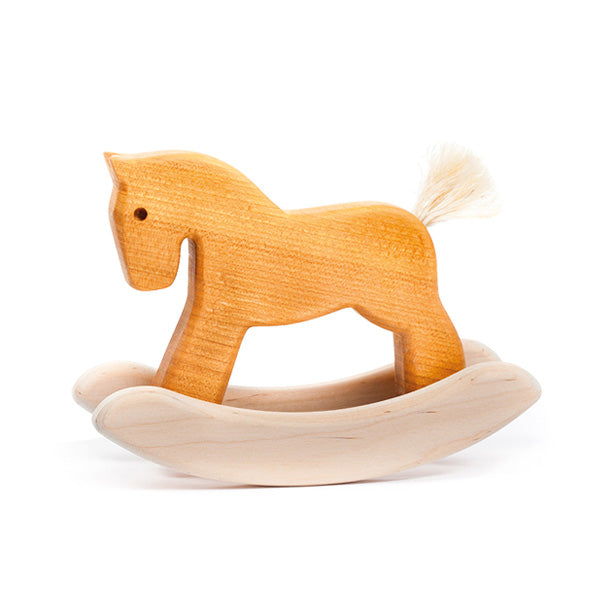
Rocking Toys: A Classic Favourite for Children’s Play
Rocking Toys: A Classic Way to Play
From rocking horses to soft animal rockers, rocking toys have delighted children for generations. Their gentle back-and-forth movement makes play feel exciting, while giving little ones a chance to imagine they are riding a horse, sailing a boat or setting off on an adventure.
Why children love rocking toys
Rocking toys offer more than simple entertainment. As children rock, they practise balance and coordination and learn how their movements affect the toy. The gentle motion can also encourage imaginative play, helping children create stories and act out different roles.
Many rocking toys are designed for toddlers and young children, but styles and features vary. Some are traditional wooden rockers, while others have soft padding, supportive seats, handles or a sturdy base. There are also spring-mounted and ride-on designs intended for different ages and settings.
Choosing the right rocking toy
When choosing a rocking toy, consider your child’s age, size and confidence. Check the manufacturer’s recommended age range and weight limit, and look for a design that offers suitable support. Younger children may benefit from a seat with sides or a backrest, while older children may prefer a simpler rocker that allows more freedom of movement.
Think about where the toy will be used, too. A rocker should have enough clear space around it to move safely, and its base should be suitable for the floor surface. If you are buying a toy for a small room, measure the area first and check how much space it needs when rocking.
Simple safety tips
- Follow the age and weight guidance provided by the manufacturer.
- Place the toy on a flat, stable surface with plenty of room around it.
- Encourage children to sit properly and hold on to the handles, if provided.
- Supervise young children during play, particularly while they are learning to use the toy.
- Check regularly for loose parts, damage, splinters or worn fittings.
- Follow the assembly and care instructions supplied with the toy.
For toys sold in the UK, check the product information and safety markings, and buy from a reputable retailer. Always follow the instructions supplied with the toy, as safety features and age recommendations differ between products.
A little rocking, a lot of imagination
A rocking toy can become a favourite part of a child’s playtime: a trusty steed one day, a spaceship the next. With the right toy, a suitable play space and an adult nearby, rocking can be a fun way for children to move, explore and dream up new adventures.
7 Tips for Safe Play with Rocking Toys
- Choose a sturdy rocking toy suited to your child’s age and size.
- Check for safety marks and follow the maker’s instructions.
- Place the toy on a flat, non-slip surface.
- Keep it away from stairs, doors and sharp-edged furniture.
- Supervise young children while they play.
- Check regularly for loose parts, cracks or worn ropes.
- Encourage gentle rocking and keep hands and feet clear.
Choose a sturdy rocking toy suited to your child’s age and size.
Choose a sturdy rocking toy that suits your child’s age, size and abilities. Check the manufacturer’s age and weight guidance, and look for a stable base, secure fittings and suitable support to help your child rock comfortably and safely.
Check for safety marks and follow the maker’s instructions.
Before buying or using a rocking toy, check for relevant safety marks and read the product information carefully. Always follow the maker’s instructions for assembly, age and weight limits, use and maintenance, as these can vary between toys.
Place the toy on a flat, non-slip surface.
Always place a rocking toy on a flat, stable, non-slip surface to help keep it steady during play. Avoid slippery floors, uneven ground and areas near steps or furniture, and check that there is plenty of clear space around the toy so children can rock safely.
Keep it away from stairs, doors and sharp-edged furniture.
Place rocking toys well away from stairs, doorways and sharp-edged furniture. This gives children plenty of clear space to rock safely and helps reduce the risk of bumps, falls or trapped fingers.
Supervise young children while they play.
Supervise young children while they play with rocking toys, especially as they learn how to get on, sit securely and rock safely. Stay close by, make sure the toy is on a flat surface with plenty of space around it, and encourage your child to hold on to any handles provided.
Check regularly for loose parts, cracks or worn ropes.
Check your child’s rocking toy regularly for loose parts, cracks or worn ropes, as damage can make it unsafe to use. Pay particular attention to joints, handles, fixings and any ropes or straps, and follow the manufacturer’s care and inspection guidance. If you find damage, stop using the toy until it has been properly repaired or replaced.
Encourage gentle rocking and keep hands and feet clear.
Encourage your child to rock gently and at a comfortable pace, rather than pushing too hard or trying to stand on the toy. Remind them to keep their hands and feet clear of the rocking base and any moving parts to help prevent bumps or pinched fingers and toes.